
My Deodorant Stings – Which Roll-on Suits Sensitive Underarms?
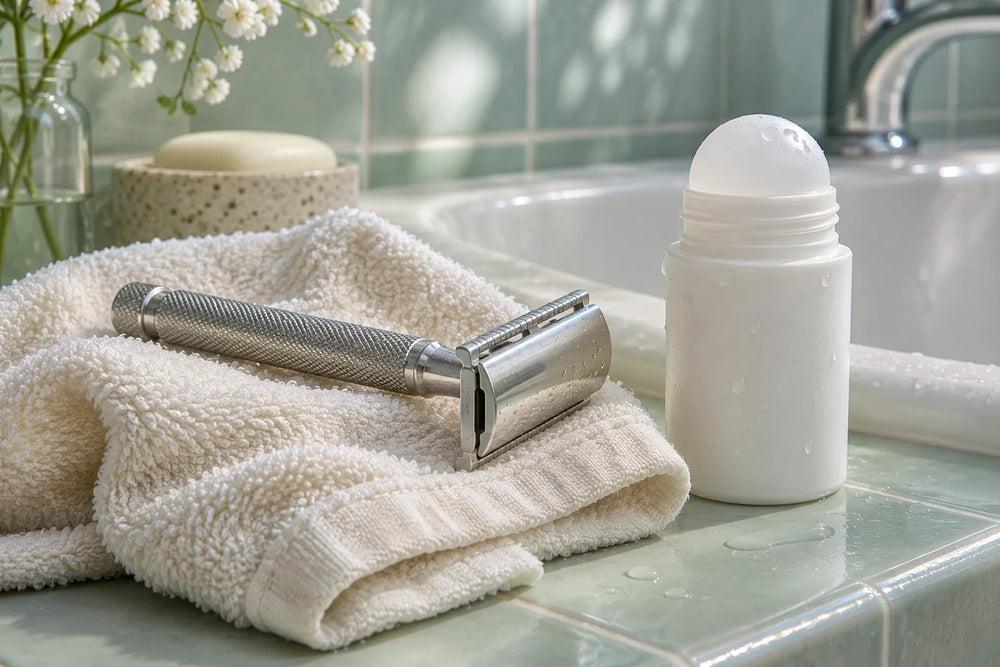
The morning after shaving
The T-shirt is already lying on the washbasin. You reach for the same roll-on as yesterday, but today the first stroke pulls under your left arm. On the right you hardly notice anything. Before you swap the deodorant, a quick question is worth asking: was the spot on the left also the one you went over twice with the razor?
If your deodorant stings, two observations help with choosing: how did the skin feel before application, and what do you expect from the product? For odour control on sensitive underarms, a fragrance-free roll-on may be an option. If you mainly want less moisture on your shirt, look for an antiperspirant. On irritated or broken skin, the next product test should wait.

My roll-on felt fine yesterday. Today it stings.
What has changed since yesterday?
Think back to the last two times you used deodorant. Had you just shaved this time? Was the roll-on different? If both changed that morning, it’s hard to tell which made the difference.
Why the same bottle can feel completely different on two days
The underarm is a skin fold. When you walk, skin rubs against skin there, and under a close-fitting top the fabric adds to it.
Water from the shower stays in the fold longer than on the forearm. After shaving, even contact with a familiar formula can be uncomfortable. A new bottle may then only solve the problem until your next shave.
Pay attention to timing. Does it sting straight away when you apply it, right after shaving? Or does an itchy, red patch develop later, even on days without shaving?
These are two different stories. From the stinging alone, you cannot read off a specific ingredient or an allergy. Recurring rash, persistent itching or painful skin belong with a dermatologist.
When making your purchase, you may prioritise a different question: what exactly bothered you about your previous deodorant? If the scent accompanies you all morning and competes with your perfume, avoiding added fragrances is already a reasonable selection criterion.
Why a fragrance-free deodorant can still be used against body odour is explained in our article on the odour question.
Turn the label over before the roll-on lands in your basket
The large print on the front promises “Sensitive”. On the back is what the formula actually contains. Take two packs in hand and search both for a term that matters to you. Parfum is easier to spot than Sodium Bicarbonate.
Even harder is spotting a word like Pentylene Glycol if you are looking for a deodorant without alcohol. The markings in the label check show why the exact name tells you more than a single buzzword.
The excerpt on the left and right is deliberately different. The practice label makes visible search terms that could appear in another formula. Alongside it is the complete ingredient list of SOURCE LAB Deo Sensitiv. This also shows you how little a quick glance at the front reveals about the actual approach to odour control.
Label magnifier
Choose a term. The marking shows where it appears on the respective label. Below, you read what you can conclude from the find.
Parfum appears in the practice excerpt. No parfum is declared in Deo Sensitiv. Fragrance-free leaves room for a faint natural odour from the raw materials. The label does not promise any particular individual tolerance.
Alcohol Denat. denotes denatured ethanol. Deo Sensitiv contains Pentylene Glycol and Propylene Glycol. These polyhydric alcohols are different substances. If by “without alcohol” you mean ethanol, look for Alcohol or Alcohol Denat. on the actual list.
Sodium Bicarbonate is the INCI name for baking soda. It appears on the practice label. The published list for Deo Sensitiv does not include this entry. Even for a baking-soda-free formula, judge it by how it feels on your skin.
Zinc Ricinoleate in Deo Sensitiv binds odour molecules. Panthenol complements the care of the underarm skin. These details explain the formula's purpose. How long you feel fresh also depends on your day.
Odour and moisture are two different shopping lists
A damp patch on grey cotton says little about how the shirt smells. Fresh sweat is usually low in odour. The typical underarm smell arises, among other things, when skin bacteria break down components of skin secretions. This explains why the skin can feel damp after exercise even when you are satisfied with odour control.
A deodorant can work at different points. Some formulas mask odour with scent. Others rely on substances that bind odour molecules. An antiperspirant has a different main job: it is meant to reduce the amount of sweat at the treated area.
Aluminium salts often take on this task. If your only expectation is a dry shirt collar, a good deodorant may still be the wrong purchase.
What is your goal – and how is your skin today?
Make a selection in both rows. The combination gives you a shopping or application step for exactly this situation.
Test a fragrance-free roll-on for odour control. A sensible test day is an ordinary day with calm, dry skin. Assess odour and skin feel separately, because visible moisture is possible with a deodorant.
Gently rinse off any bothersome product residue and give the skin a rest. You can test the odour protection later on intact skin. A stinging shaving day is poorly suited to comparing two formulas.
If less sweat matters most to you, check the label for the term antiperspirant and the application instructions. A fragrance-free deodorant for odour binding serves a different purpose, even if it feels pleasantly dry when applied.
On a freshly irritated underarm, a break takes priority. Once the skin is calm again, you can look for an antiperspirant that suits your goal. If symptoms persist, have the skin checked before trying other products.

What you can observe differently on a shaving day
When exactly does the stinging start?
Pat your underarm dry after showering. Does it already sting where your T-shirt seam touches, or only when you apply the roll-on? On another day, try the same routine without shaving.
Keep deodorant off broken skin. Stop using a product if it repeatedly stings.
How different body areas behave in everyday life can be read in the skin guide for face, scalp and body.
Four questions before you buy
Is “without parfum” the same as odourless?
A product may contain no added scent and still smell slightly of its raw materials when applied. If the scent in everyday life bothers you most, check the ingredient list and the information on fragrancing.
Is a roll-on generally milder than a stick?
The format tells you how the product reaches the skin. Tolerance depends on the formula and your skin condition, among other things. A roll-on with fragrance and a fragrance-free stick can be composed very differently.
How do I recognise a deodorant without baking soda?
Search the full list for Sodium Bicarbonate. Baking soda and aluminium salts are different ingredients. From a statement about one, you cannot derive anything about the other.
What should I assess at the end of a test day?
Ask yourself whether your skin stayed comfortable, whether odour bothered you and whether you could live with the moisture on your shirt. Three separate answers will help you with your next purchase more than a blanket verdict of “works”.

A roll-on whose formula you can read up on
SOURCE LAB Deo Sensitiv combines Zinc Ricinoleate for odour binding with Panthenol for care. It is free from added fragrances, ethanol and aluminium salts. Application and the complete ingredient list are on the product page. This way you can transfer the terms from the label magnifier directly to a real product.
View Deo Sensitiv and ingredient listMore from the journal
 The Odour Question: Does Aluminium-Free Deodorant Need Fragrance?
 One Skin, Four Worlds: Why Skincare Can’t Work the Same Everywhere
 Sunscreen when you sweat and dry skin in air conditioning


Tried these yet?


