
Why Does Your Skin Feel Tight After Washing? Is It Your Soap?
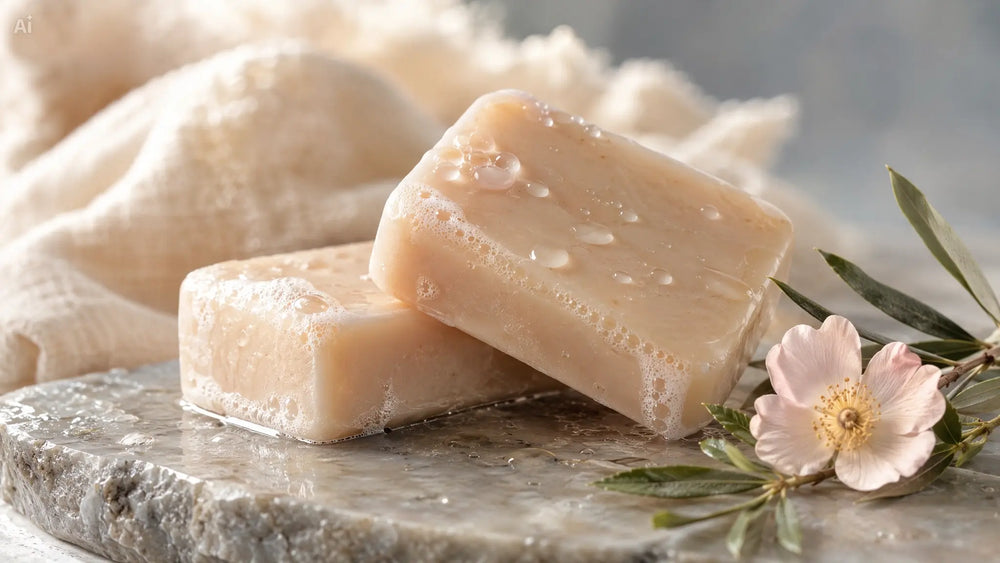
The bar of soap has been sitting in your shower for weeks. Handmade, made with olive oil and free from added fragrance. Yet after washing, your skin still feels tight — especially on your shins and upper arms. You reach for more body lotion, only for the same thing to happen the next day.
Soap is alkaline. The surface of your skin isn't. But what does that actually mean? The answer is more nuanced than many skincare guides suggest.

My skin starts to feel tight as soon as I dry off
Try one change in the shower
Notice the water temperature and how long you spend in the shower. Change one at a time so you can tell what feels different.
Depending on its formulation, traditional soap typically has a pH of around 8.5 to 11. The skin surface is usually mildly acidic, at approximately 4.5 to 5.5.
Washing can temporarily raise skin-surface pH, which then gradually returns towards its usual range. For many people, that isn't a problem. If your skin is dry, reactive or prone to eczema, however, it's worth understanding.
Whether a soap suits your skin cannot be judged by pH alone. The formula, water temperature, duration and frequency of washing also matter. These are the details worth examining in your own routine.
A quick note: Tightness, redness and flaking can have several causes. If your skin becomes sore, continues to burn or develops a rash, seek medical advice. This article is not a substitute for a dermatologist's assessment.
The short answer: is soap good for dry skin?
Traditional soap can remove more of the skin's surface oils than a mild soap-free cleanser, also known as a syndet. Whether it does so in practice depends on the formula, water temperature, how long and how often you wash — and what you apply afterwards.
A superfatted soap containing shea butter, almond oil and glycerin produced during saponification may leave a different after-wash feel from a basic household soap. For sensitive skin, fragrance, the overall formula and washing habits deserve attention alongside pH.
If your skin is very dry, irritated or inflamed, a gentle, mildly acidic soap-free cleanser may be more comfortable. Choosing what suits your skin matters more than declaring one cleansing format universally better.
Why is soap alkaline?
Soap is made when fats react with an alkali — a process called saponification. That's why the ingredient lists of SOURCE LAB soaps include plant oils such as olive, coconut and castor oils, shea butter and almond oil, plus rosehip oil in the facial bar, as well as sodium hydroxide.
Sodium hydroxide is the alkali used to turn the oils into soap. When saponification is correctly completed, no excess sodium hydroxide should remain; it is not a skincare active ingredient.
This reaction also produces glycerin. In traditionally made soap, the glycerin can remain in the finished bar, whereas some industrial manufacturing processes remove it. Glycerin attracts water, which helps explain why the feel of one soap can differ from another.
Another important part of a soap formulation is its level of superfatting. In a superfatted recipe, a proportion of the fats is deliberately left unsaponified. Which oils remain, and how the bar feels during use, depends on the recipe and manufacturing process.
What does pH tell you about your skin — and what doesn't it?
The outer surface of healthy skin is mildly acidic. This so-called acid mantle is linked to several processes involved in barrier function, including lipid processing, the shedding of dead skin cells and the skin's defence against unwanted microbes.
View the illustration

Typical pH ranges: the skin surface is mildly acidic, while traditional soap is alkaline. Comfort also depends on the formula and how you wash.
An alkaline cleanser can temporarily shift skin-surface pH. The skin can then move back towards its usual range, although the time it takes varies. Skin condition, the cleanser itself and the way it is used all make a difference.
Here's the detail that often gets missed: pH alone cannot tell you how gentle a cleanser will feel. A review published in 2021 noted that tolerability is influenced by how surfactants and other ingredients interact with the outermost layer of skin — not simply the number on the bottle.
Someone may find a well-formulated soap more comfortable than a harsh cleansing gel, even when that gel has a lower pH. Added fragrance can also cause problems in an otherwise acidic product.
pH describes the product. How your skin responds depends on more than pH alone.
Water temperature, washing time, frequency and aftercare are four practical factors to consider alongside the cleanser's pH.
Four things that matter alongside pH
Superfatting
Depending on the formula and degree of superfatting, some lipids may remain on the skin. They don't replace a moisturiser, but they can change how your skin feels after cleansing.
Glycerin
Glycerin is formed during saponification and can remain in handmade soap. It attracts water and plays a moisture-related role in the formula.
Fragrance and alcohol
Added fragrance can affect how sensitive skin tolerates a cleanser. SOURCE LAB soaps are formulated without added perfume or alcohol.
Heat, duration and frequency
Hot water and long showers can put additional stress on dry skin. Apply soap briefly, then rinse thoroughly with lukewarm water.
CLEANSING COMPARED
Soap, syndets and tight skin: what changes after washing?
Choose a focus. The diagram compares cleansing types and what may follow afterwards.
Schematic cleansing comparison, not a pH measurement or tolerance test.
View the illustration

Soap vs syndet vs body wash: what's the difference?
Traditional soap is made by saponifying fats. It is usually alkaline, often with a pH of approximately 8.5 to 11, and can be made from plant or animal fats.
A syndet is a cleanser made with synthetic detergents and can be formulated to a mildly acidic pH of around 5.5. Many body washes and facial cleansing gels are syndets rather than traditional soap.
Chemically speaking, 'pH neutral' means pH 7. In skincare, 'skin-pH-friendly' or 'pH balanced for skin' often refers to a pH closer to 5.5. Neither label guarantees a gentle formula. Even a pH-balanced cleansing gel may feel drying or irritating if its surfactants or their concentrations don't suit your skin.
When might soap suit dry skin — and when might it not?
There's no single answer for every skin type. But a few everyday signs can help guide your choice.
When it may work well
Your skin is dry but not irritated. You wash once or twice a day, briefly and with lukewarm water. You prefer a cleanser without added fragrance or alcohol, and you apply moisturiser while your skin is still slightly damp.
For some people, a well-formulated superfatted body soap may feel more comfortable than a strongly foaming shower gel.
When to choose something else
Your skin is red, stinging, flaky or has open areas. You are prone to eczema, wash repeatedly throughout the day or are cleansing immediately after shaving. Your facial skin is already irritated.
In these situations, a gentle, mildly acidic soap-free cleanser is often a better starting point. Seek medical advice if symptoms persist.

Why your face may react differently from your body
What can I change when washing my face?
The outermost skin layer varies in thickness across the body. Facial skin also tends to be cleansed more frequently, and removing makeup can involve extra rubbing. As a result, you may notice discomfort from a cleanser on your face sooner than on your arms or legs.
That's why the two SOURCE LAB cleansing bars have different formulations. The Olive Body Soap contains olive oil, shea butter and almond oil. The Rosehip Facial Soap adds rosehip oil and is intended for normal to dry facial skin.
If your skin still feels dry despite moisturising, your cleanser might be part of the picture. Our guide to dry skin despite moisturiser explains what else to look for in your routine.
How to tell whether your soap suits your skin
Two weeks, one change at a time and a few brief notes. That's often enough to notice a pattern in how your skin responds — and it's more useful than changing five products at once.
View the illustration

This is self-observation, not a clinical test. If you have eczema or use prescribed skincare treatments, discuss any significant changes with your healthcare professional.
What a simple solid-cleansing routine for dry skin can look like
If your skin is comfortable and you're looking for a cleanser without added fragrance or alcohol, you may prefer two separate bars: one formulated for the face and one for the body.
View the illustration

Both bars are traditional soaps and therefore alkaline.
If alkaline cleansing doesn't agree with your skin, a mild syndet may be more comfortable. This is particularly relevant if your skin is very dry or prone to eczema.
You can also get the two bars together in our Face & Body Soap Duo with a cotton soap bag for €18.90. If you want to understand the wider relationship between cleansing and skin comfort, explore our guide to overdoing skincare for a closer look at how routines affect the skin.
Is alkaline soap bad for your skin?
Not necessarily. Soap can temporarily raise the pH of the skin surface, which usually moves back towards its normal range. What matters is how your skin responds. Redness, stinging or persistent tightness may be signs that the cleanser isn't right for you.
For very dry, irritated or inflamed skin, a gentle, mildly acidic soap-free cleanser may be the better option. This information does not replace a dermatological assessment.
Scientific context and references
This article distinguishes between what we know about the skin's acid mantle, findings from studies of cleansing products, and what can reasonably be said about a specific bar of soap. SOURCE LAB cleansing bars are handmade, saponified plant-oil soaps with an alkaline pH. No claim is made that they are skin-pH-neutral or provide a medical benefit.
- PMC: Skin Cleansing without or with Compromise – Soaps and Syndets (overview of soap and syndet pH ranges)
- PubMed: Not all marketed skin cleansers' pH is optimal for atopic dermatitis (study of 250 products)
- PubMed: Correlation between pH and irritant effect of cleansers marketed for dry skin
- International Journal of Cosmetic Science: Role of pH in skin cleansing (mildness depends on more than pH)
- PubMed: Skin biophysical assessments of four types of soaps by forearm in-use test
- PubMed: Epidermal barrier function in dry, flaky and sensitive skin (skin barrier review)
Frequently asked questions about soap and dry skin
Is natural soap better for your skin than body wash?
Not always. A superfatted, fragrance-free soap may feel more comfortable for some people than a strongly foaming body wash. If your skin is irritated or prone to eczema, a mild, acidic soap-free cleanser is often a safer choice. The word 'natural' alone tells you little about tolerability.
Can I wash my face with soap?
Yes, if your facial skin tolerates it. Facial skin can react quickly to repeated cleansing. If you notice burning, redness or tightness, stop using the product and seek medical advice if symptoms persist.
Why does my skin feel tight after a shower?
Hot water, long showers, strong cleansing agents and not moisturising afterwards can all contribute. To work out what matters most for you, change one part of your routine at a time.
Should I moisturise after washing with soap?
If your skin is dry, moisturising while it's still slightly damp is a helpful step. Some soaps may leave a small amount of oil on the skin, but they do not replace a moisturiser.
One bar of soap can't tell the whole story of your skin
pH is useful information, but it cannot predict whether your skin will tolerate a cleanser. The clearest signals often come from how your skin feels during washing, afterwards and the next morning.
If washing leaves your skin feeling tight, look at water temperature, cleansing time and your aftercare. Sometimes a small adjustment makes a routine feel much more comfortable.
Not sure what your skin needs next?
If your skin still feels unsettled after washing, it helps to look at your whole routine. Our free 14-day Skin Compass offers simple prompts, a skin map and an easy-to-follow plan to help you understand your skin and make more informed choices.
Explore the free 14-day Skin Compass →A self-observation guide, not a medical test.
Two bars, two purposes
Rosehip Facial Soap for the face, Olive Body Soap for the body — both made without added perfume or alcohol.
Discover both bars together in the SOURCE LAB Soap Duo, complete with a cotton soap bag. Use them separately or as part of the same cleansing routine.
EXPLORE THE SOAP DUOTry it with our 30-day satisfaction guarantee.
More from the SOURCE LAB Magazine
If you'd like to explore this topic further, these guides offer practical perspectives on your skincare routine.
 You Moisturise. Your Skin Still Feels Dry. The Problem May Start Somewhere ElseWhy is your face dry despite moisturiser? Learn how cleansing, water-binding ingredients and barrier care work together.
 Overdoing Skincare: 7 Signs Your Skin Needs a Simpler RoutineCan you use too much skincare? Learn seven signs that your routine may be overwhelming your skin and how gentle barrier care can help.
 When Skincare Becomes a Layering Ritual: What Skin Flooding Really DoesSkin flooding for dry skin: a simple approach to layering hydration with mist and moisturiser.
 Why We Spray Skincare on Our Faces — and When a Face Mist Actually Makes SenseFace mist for dry or sensitive skin: how to use a facial spray alongside moisturiser and barrier care.
 THE MAGAZINEExplore the SOURCE LAB MagazineMore guides to skin, ingredients and daily skincare routines.Visit the magazine
 BY THE WAYGet to know SOURCE LABDiscover our mineral skincare and the idea behind the brand.Visit homepage
Tried these yet?


