Between Folk Remedy and Ingredient Hype: What Nettle Shampoo Can Really Do
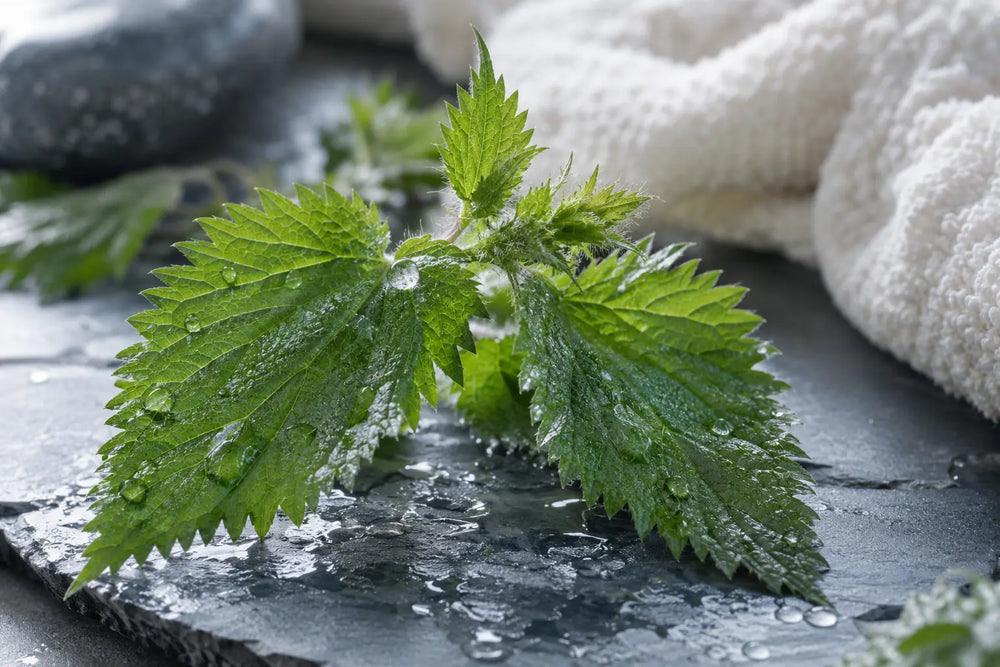
Nettle in shampoo sounds like something from an old herbal cabinet. The plant has been associated with hair care for generations.
What makes nettle interesting today is a very modern combination: roots that become oily quickly and a scalp that can still feel sensitive, tight or uncomfortable.
Neither aggressive degreasing nor the idea that one botanical extract can solve every scalp problem is particularly convincing.
The more useful questions are simpler: how well does the shampoo cleanse, how is the formula built, and what can nettle and panthenol realistically contribute within it?
Nettle shampoo becomes particularly interesting when oily roots need regular cleansing but the scalp does not benefit from an increasingly complicated routine.
Nettle is not a clinically proven hair-growth treatment. It is one botanical component within a shampoo whose first job is much more basic: cleaning the scalp and roots effectively.
Why put nettle in shampoo at all?
Stinging nettle, or Urtica dioica, contains a broad range of secondary plant compounds, including polyphenols, flavonoids and phenolic acids.
Laboratory research on polyphenol-rich nettle fractions has found interesting antioxidant and inflammation-modulating activity.
That makes nettle a reasonable botanical ingredient for cosmetic formulas. It does not, however, justify turning it into a miracle claim.
In a shampoo, the plant extract never works in isolation. Surfactants, pH, conditioning ingredients, fragrance and the complete formulation determine how the product behaves on hair and scalp.

Oily roots and a sensitive scalp can absolutely coexist
Roots that become greasy quickly often lead to a very simple conclusion: cleanse more aggressively, wash less often and somehow “train” the scalp to produce less oil.
The scalp is not quite that simple.
Higher sebum production does not automatically mean resilient skin. Oily roots can exist alongside tightness, itching or an otherwise reactive scalp.
Frequent washing is not inherently wrong either. How often shampoo makes sense depends on sebum production, hair type, exercise and styling. An oily scalp may genuinely benefit from more frequent cleansing.
More important is where and how the shampoo is used: primarily on the scalp and roots, where sebum, sweat and product residue accumulate.
If your roots become oily quickly while the scalp still feels sensitive, see our guide to oily roots and a sensitive scalp.
We explore the topic in more detail in Scalp Skincare: how to care for a sensitive scalp.
An oily scalp does not need to be “dried out”
The aim of shampoo is not to strip the scalp as aggressively as possible. It is to remove sebum, sweat and residue reliably and leave the scalp feeling clean and comfortable.
An itchy scalp: what should you look at first?
Itching is a symptom, not a diagnosis.
Product residue, dry skin, dandruff, fragrance, unsuitable cleansing or dermatological conditions can all play a role.
It would therefore be misleading to present nettle as a treatment for an itchy scalp.
What does make sense is a clear cleansing routine: apply shampoo where sebum and residue collect, massage with the fingertips and rinse thoroughly. Shampoo left behind on the scalp can itself contribute to irritation and itching.

Inside the formula: what is actually in SOURCE LAB Nettle Shampoo?
With shampoo, the ingredient list often tells you more than the headline ingredient on the front.
The SOURCE LAB formula contains ten INCI entries, combining cleansing, nettle, panthenol, hydration, texture and preservation in a deliberately concise formula.
Aqua, Disodium Laureth Sulfosuccinate, Urtica Dioica, Pentylene Glycol, Panthenol, Citrus Paradisi Peel Oil, Xanthan Gum, Sodium Benzoate, Citric Acid, Limonene
At SOURCE LAB, Aqua represents the mineral water phase containing the SOURCE LAB Mineral Mix, so even the shampoo's water phase is part of the mineral concept.
The main cleansing surfactant. It removes sebum and residue. The formula is made without SLS or SLES.
Nettle is the botanical focus of the shampoo and contributes its characteristic phytochemical profile.
Provitamin B5 is used in cosmetics as a hair-conditioning and moisture-oriented care ingredient.
Supports moisture, product feel and formulation stability.
Gives the shampoo its fresh, light grapefruit scent.
Citric acid is used to adjust pH, while xanthan gum helps create the desired texture.
The interesting part is not that nettle or panthenol can “do everything”. It is that every ingredient has a clear role within the formula.
Panthenol is a good example of responsible interpretation. It is used in cosmetics as a conditioner and moisture-oriented care ingredient, but findings from leave-on skin formulas cannot simply be transferred to a rinse-off shampoo.

Who may find nettle shampoo especially useful?
Roots become oily quickly
When sebum and styling residue need regular removal and a lightweight hair feel matters.
The scalp reacts easily
When a clear, manageable routine feels more suitable than constantly changing specialist products.
The scalp feels coated or uncomfortable
When sebum, sweat or residue may be contributing. Persistent itching should be assessed medically.
You wash your hair frequently
When exercise, sebum production or styling makes regular cleansing sensible.
Part of honest product advice: the shampoo contains Grapefruit Peel Oil and Limonene. If you have a known citrus or fragrance allergy, individual tolerance should therefore be considered.

Using nettle shampoo does not need to become a scalp ritual
With dense hair, let water reach the scalp for a little longer before applying shampoo.
That is where sebum and residue accumulate. The lengths usually need far less direct cleansing.
More friction does not automatically mean better cleansing.
Residue left on the scalp can contribute to discomfort or itching.
What about dandruff and hair loss?
This is where traditional plant care can quickly turn into exaggerated claims.
For mild flaking, appropriate regular cleansing can be an important part of the routine. Persistent or pronounced dandruff may have other causes and may require a targeted anti-dandruff shampoo.
For hair loss, the distinction is even clearer: keeping the scalp clean and cared for is sensible, but that does not make nettle shampoo a clinically proven hair-growth treatment.
Sudden, increasing or persistent hair loss should be medically assessed.
Your scalp does not need an ingredient competition
A shampoo first needs to cleanse reliably, rinse away cleanly and suit the scalp. Nettle, panthenol and minerals can complement that foundation — not replace it.
Scientific context & sources
This article discusses nettle as a cosmetic botanical extract and the functions of selected ingredients in the stated INCI. Findings from raw-material, cell or leave-on studies cannot automatically be transferred to a finished rinse-off shampoo.
- PubMed: Urtica dioica polyphenols — antioxidant and inflammation-modulating activity in human skin cells
- Cosmetic Ingredient Review / PubMed: Panthenol as hair conditioner and humectant
- Cosmetic Ingredient Review / PubMed: Pentylene Glycol and related glycols in cosmetics
- American Academy of Dermatology: healthy hair and shampoo use
- American Academy of Dermatology: itchy scalp and thorough rinsing
- American Academy of Dermatology: dandruff and targeted shampoos
Common questions about nettle shampoo
Is nettle shampoo good for oily hair?
It can be a good fit for oily roots when the overall formula removes excess sebum and residue effectively. The cleansing system matters more than nettle alone.
Is nettle shampoo suitable for a sensitive scalp?
It can be, depending on the complete formula and personal tolerance. SOURCE LAB Nettle Shampoo contains Grapefruit Peel Oil and Limonene, which should be considered if you have a known fragrance or citrus allergy.
Can nettle shampoo help an itchy scalp?
If sebum, sweat, product residue or an unsuitable cleansing routine are contributing to discomfort, appropriate washing can help. Persistent or severe itching should be medically assessed.
Does nettle shampoo help hair growth?
Nettle shampoo should not be presented as a clinically proven hair-growth treatment. A clean and cared-for scalp is a sensible foundation, but meaningful hair loss requires proper assessment.
What does panthenol do in shampoo?
Panthenol is used in cosmetics as a hair-conditioning and moisture-oriented care ingredient. It complements a shampoo formula whose primary function remains cleansing.
How often can you use nettle shampoo?
As often as suits your sebum production, hair type, exercise and styling routine. An oily scalp may need more frequent washing.
Continue reading in the SOURCE LAB Magazine
What a sensitive scalp really needs
Washing frequency, build-up, dry shampoo and why fewer products can sometimes bring more clarity.
Why the scalp follows its own rules
Sebum, pH, the microbiome and cleansing make the scalp a distinct skin zone.
Nettle doesn't have to be a miracle ingredient to be useful in shampoo
Especially when roots become greasy quickly and the scalp is also sensitive, sensible cleansing is often more important than the next specialist serum.
Nettle complements this base as a plant extract, panthenol as a conditioning formulation ingredient, and the SOURCE LAB Mineral Mix as the mineral water base.
The result is intended to be a shampoo that cleans reliably and fits a straightforward routine, rather than a complicated scalp treatment.
For fresh roots and a straightforward scalp routine
Ten INCI entries. No SLS/SLES. No silicones. With nettle, panthenol and the SOURCE LAB Mineral Mix.
Discover SOURCE LAB Nettle Shampoo for regular cleansing and oily roots.
DISCOVER NETTLE SHAMPOOTry it with our 30-day satisfaction guarantee.


Have you tried it yet?


