The New Beauty Zone Is Hiding Under Your Hair
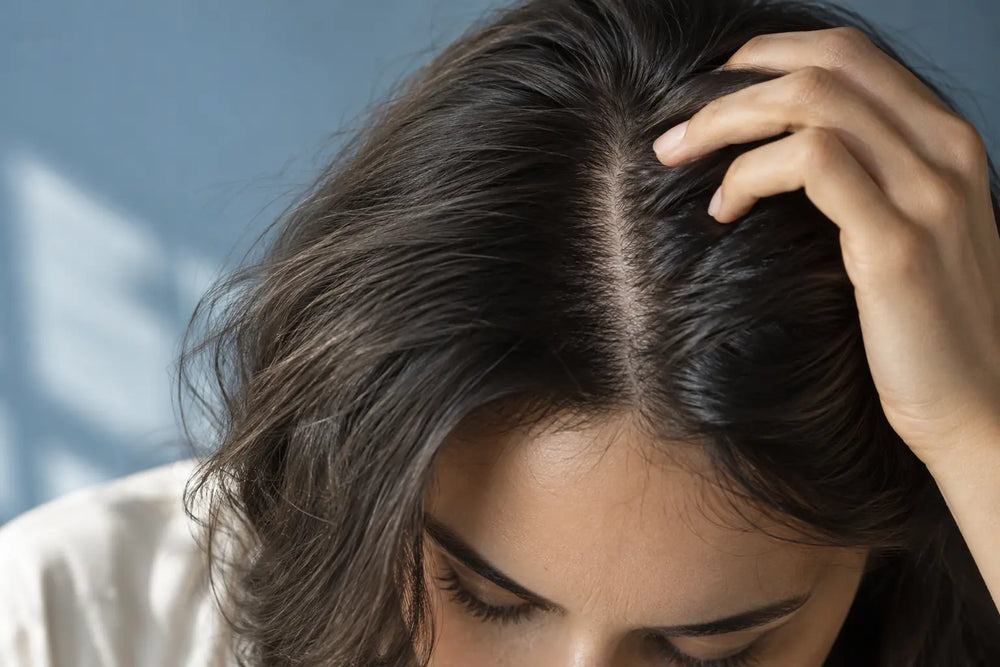
The face gets cleansers, toners, serums, acids and barrier creams. For decades, the scalp mostly got one thing: shampoo.
Now the skin underneath our hair has become beauty’s latest skincare zone — complete with exfoliants, serums, oils, masks and massage tools.
The basic idea makes sense. The scalp is skin. It produces sebum and sweat, has its own barrier, contains hair follicles and can become dry, irritated, oily or flaky.
What does not automatically follow is the need for a ten-step scalp routine. Good scalp care often begins somewhere much less glamorous: with the way we wash our hair.
Scalp skincare makes sense when it solves a specific problem. It becomes unnecessarily complicated when every symptom is answered with another product.
Applying shampoo properly, washing as often as your scalp actually needs and removing residue thoroughly are more important for many routines than the latest scalp serum.
The scalp is skin — but it is not a second face
The idea behind the “skinification of haircare” is fundamentally sensible: look beyond the visible hair and pay attention to the skin it grows from.
But the scalp differs from facial skin in important ways. It is densely covered with hair, contains large numbers of follicles and sebaceous glands, and is regularly exposed to shampoo, conditioner, styling products, dry shampoo and sometimes heat.
It is also much harder to see. Redness, fine flakes, residue or oily areas may only become obvious once the scalp already feels uncomfortable.
Scalp skincare therefore makes sense — but not as a copy of a facial routine. What the scalp needs first is cleansing that actually reaches the place where sebum and residue accumulate.
To understand why different areas of skin behave so differently, read our Skin Map.

Scalp care surprisingly often begins with shampoo
Shampoo removes sebum, sweat, skin flakes and product residue. An additional scalp treatment cannot replace that basic job.
Plenty of us wash our hair without really washing our scalp
It sounds obvious, but in practice it makes a surprisingly large difference.
Shampoo is often placed on top of the hair, moved around briefly and rinsed away. With thick or long hair, much of it may never reach the scalp evenly.
Yet that is exactly where cleansing matters most.
Get water all the way to the scalp
With dense hair, spend a little longer thoroughly wetting the roots before applying shampoo.
Do not start in just one place
Distribute shampoo across the hairline, crown, sides, back of the head and nape.
Fingertips, not fingernails
Work the shampoo in gently. Scratching harder does not cleanse better and can add mechanical irritation.
Rinse more thoroughly
Pay particular attention to the nape, around the ears and very dense sections of hair.
The lengths do not need to be scrubbed with shampoo as intensively as the scalp. The cleanser will run through them as you rinse.

How often should you wash your hair? The longest gap does not win
Few haircare rules are as persistent as the idea that washing less often is automatically better.
There is no universal ideal interval for the scalp.
How often washing makes sense depends on sebum production, hair texture, exercise, sweating, styling and dry-shampoo use.
More frequent washing may make sense
with oily roots, frequent exercise, heavy sweating, fine hair or regular use of styling products and dry shampoo.
Longer gaps may suit you
with lower sebum production, very dry lengths, thick or curly hair and little product residue.
The best washing schedule is not the longest one you can tolerate. It is the one that keeps your scalp and hair feeling consistently clean and comfortable.
Oily roots may therefore genuinely need regular washing — regardless of what haircare myths suggest.
Do you really need to shampoo twice?
Double shampooing has also started to sound like a rule. It is better understood as a tool.
If your scalp carries a lot of dry shampoo, styling residue or sweat, a second small wash can be useful.
If the scalp already feels clean after one careful wash, there is no reason to cleanse again simply because the internet says so.
A better measure: not how much foam you create, but whether the scalp is cleansed evenly and the shampoo rinses away completely.
When your scalp itches, “more skincare” is not automatically the answer
Itching, flakes, oiliness and a coated feeling can look surprisingly similar at first.
The causes can be completely different.
Dry scalp
May feel tight and show fine dry flakes, for example in dry air or after an unsuitable cleansing routine.
Dandruff
Can occur even on an oily scalp and may involve more obvious flaking, redness or recurring itching.
Build-up
Residue from sebum, styling products and dry shampoo can leave roots feeling heavy, sticky or greasy more quickly.
The main thing they have in common is that another serum is not automatically the solution.
Persistent itching, pronounced redness, crusting, pain or severe flaking should be professionally assessed.

Dry shampoo can make hair look cleaner. It does not clean it
Dry shampoo is useful, especially when roots become visibly oily between washes.
But it performs a different job from shampoo and water. It mainly absorbs excess oil and changes the appearance and feel of the hair.
It does not thoroughly remove sebum, dead skin cells and product residue from the scalp.
Looking fresher and actually being clean are two different things.
If you use dry shampoo frequently, the next proper wash becomes especially important.
Exfoliant, oil or serum: does the scalp actually need any of them?
Sometimes. As mandatory steps? No.
Scalp exfoliant
May be useful for certain types of residue, but an already sensitive or irritated scalp does not automatically benefit from more mechanical friction.
Scalp oil
May feel pleasant on a very dry scalp. With oily roots or build-up, extra oil may simply add more weight.
Scalp serum
Can make sense when the formula addresses a clearly defined goal. The word “serum” alone does not tell you whether your scalp needs it.
What job is this product actually meant to do?
If better cleansing already solves the problem, your scalp does not automatically need another leave-on step.
Oily roots and a sensitive scalp are not mutually exclusive
This is one of the most important distinctions in scalp care.
High sebum production does not automatically mean resilient skin. Roots can become oily quickly while the scalp simultaneously feels sensitive, tight or itchy.
In that situation, trying to strip away even more oil may simply make the scalp feel worse.
A more useful approach is reliable cleansing without turning every wash day into a full scalp treatment.
Read more in Between Folk Remedy and Ingredient Hype: What Nettle Shampoo Can Really Do.
Liquid or solid? The format matters less than you might think
Whether shampoo comes from a bottle or a solid bar tells you surprisingly little about how well it will suit your scalp.
The cleansing system, complete formula, fragrance, conditioning ingredients and how well the product rinses away all matter more.
Nettle Shampoo
SOURCE LAB Nettle Shampoo combines nettle, panthenol and the SOURCE LAB Mineral Mix in a formula made without SLS/SLES or silicones.
It is designed as a straightforward regular cleanser for scalp and roots.
Shampoo Bars
Solid shampoos can also cleanse the scalp effectively. What matters is whether the formula and application suit your own hair and scalp.
EXPLORE HAIR & SCALP CLEANSING
Five ways we make scalp care more complicated than it needs to be
The cleanser may not reach all areas of the scalp evenly.
Looking fresh does not replace a proper wash.
Itching, dry scalp, dandruff and build-up can have different causes.
More friction does not automatically produce better cleansing.
What dry lengths need can weigh down the roots unnecessarily.
When scalp care stops being a cosmetic question
Not every scalp issue belongs in an experiment with new products.
Severe or persistent itching, pronounced redness, crusts, weeping or open areas, pain, recurrent heavy flaking or unusual hair loss should be assessed by a medical professional.
Similar-looking symptoms can have very different causes — and at that point, the right diagnosis is more useful than the latest viral scalp-care product.
Scientific context & sources
This article separates cosmetic scalp care from medical treatment. Guidance on shampoo use, washing frequency, dry shampoo, dandruff and itchy scalp follows dermatological recommendations.
Common questions about scalp care
How often should you wash your hair?
As often as suits your sebum production, hair type, exercise, styling and scalp comfort. Oily roots may need much more frequent washing than dry or coarse hair.
Why does my scalp itch after washing?
Possible reasons include shampoo residue, an unsuitable formula, dry scalp, dandruff or other skin conditions. Persistent itching should be assessed.
Is washing your hair every day bad for your scalp?
Not necessarily. Appropriate frequency depends on your scalp, hair type, sebum production and shampoo formula. A very oily scalp may suit frequent washing.
Do you need to shampoo twice?
No. Double shampooing can be useful with lots of dry shampoo, styling residue, sweat or build-up. If one wash leaves the scalp clean, a second is not automatically necessary.
Can an oily scalp also be sensitive?
Yes. High sebum production and a scalp that feels sensitive, tight or itchy can occur at the same time.
What is scalp build-up?
Build-up refers to accumulated sebum, styling products, dry shampoo and other residue. A thorough wash is often more useful than adding another leave-on treatment.
Good scalp care is often less exciting than social media makes it look
The scalp deserves attention. It does not automatically need its own shelf of products.
Getting shampoo onto the scalp, washing at a suitable frequency, rinsing away residue properly and not treating every flake as the same problem already gets you surprisingly far.
Good scalp skincare does not begin with more products. It begins with understanding which problem actually needs solving.

Cleansing that suits your scalp — without scalp-care overload
Discover Nettle Shampoo and our solid shampoos for straightforward cleansing of scalp and hair.
DISCOVER SOURCE LAB HAIR CARETry it at your own pace with our 30-day satisfaction guarantee.
More Articles


Have you tried it yet?


